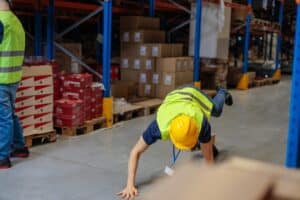
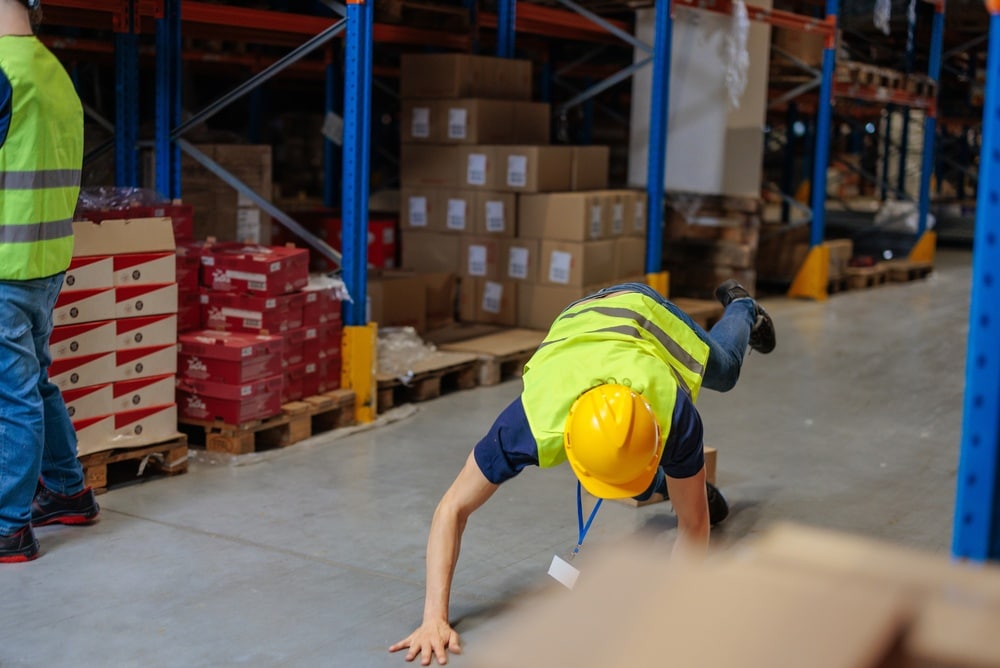
Preventing slips, trips, and falls in the workplace is one of the most critical safety priorities for California employers. These incidents remain among the most common causes of workplace injury across all industries, often resulting in serious injuries, lost work time, and long-term medical complications. During National Safety Month 2026, Bizhaven is shining a light on how employers can take proactive steps to reduce these preventable hazards.
Construction employees face fall hazards from ladders, roofs, scaffolds, and elevated work surfaces. Warehouse and manufacturing employees encounter slip hazards from spills, cords, uneven walking surfaces, and congested work areas. Office employees are frequently injured by poor housekeeping, loose cords, wet entryways, and improperly stored materials.
OSHA continues to identify fall protection violations as one of the most frequently cited workplace safety violations nationwide.
Source: OSHA Top 10 Most Frequently Cited Standards
What are we seeing?
OSHA investigations regularly involve incidents where employees fell from ladders, roofs, mezzanines, loading docks, or slippery walking surfaces after hazards were left uncorrected or proper fall protection was not used.
Source: OSHA Walking-Working Surfaces
Common Injuries
| Common Injuries | |
|---|---|
| Construction |
|
| Warehousing & General Industry |
|
| Office Environments |
|
Best Practices
- Maintain clean and organized work areas
- Clean spills immediately
- Keep walkways clear
- Inspect ladders before use
- Use proper footwear
- Maintain three points of contact on ladders
- Report damaged flooring or unsafe surfaces
- Use fall protection when required
What can we discuss to be proactive?
- What slip or trip hazards are most common in our workplace?
- How can housekeeping improve?
- Are employees consistently using ladders safely?
Remember
Most slips, trips, and falls happen during routine tasks and occur within seconds. Maintaining awareness, correcting hazards early, and practicing good housekeeping are essential to preventing slips, trips, and falls and keeping every employee safe.
Read the Full Series